



The civil service reform in the health sector established the National Medical Service. The NMS was established in Bhutan in 2022 as a semi-autonomous body under the Ministry of Health with its role to provide and manage specialized healthcare services in the country. It has three departments namely the Department of Clinical Services, the Department of Biomedical Engineering and the Department of Medical Products. The hospitals and health workforce are managed by the Department of Clinical Service.
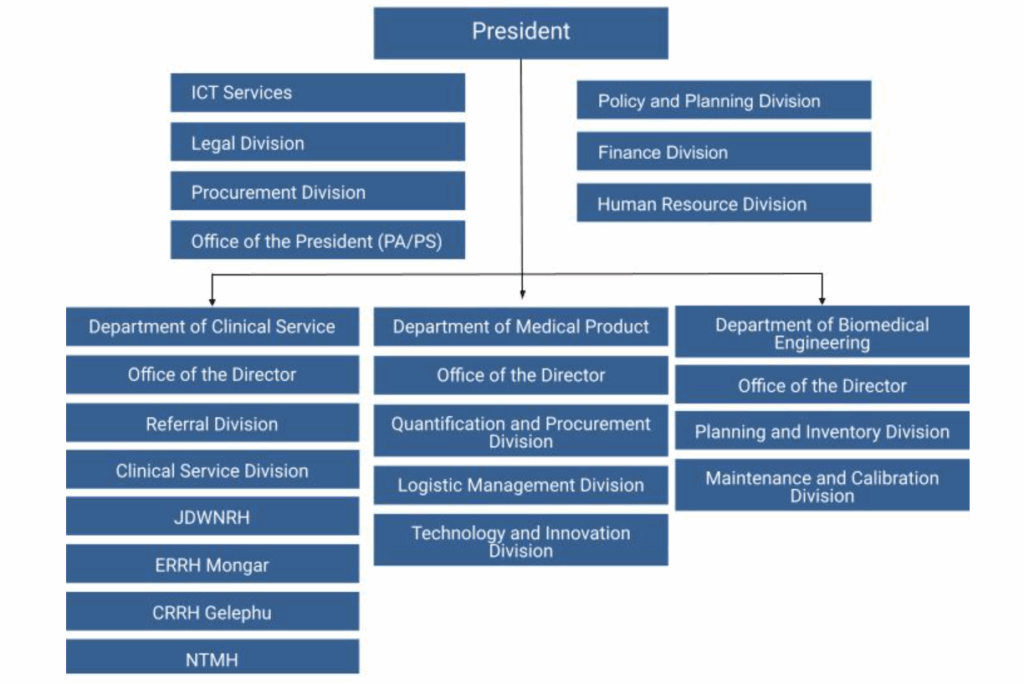
NMS Organogram
- National Referral Hospital: This National Referral Hospital with 350 beds caters to OPD/non-referred cases as well as referred-in patients from various levels of health centers, including regional referral hospitals in the country. As an apex tertiary institute, JDWNRH provides sub-specialist services including Neurosurgery care, Oncology care, Epidural Analgesia during Labour, Urological Services, and Pediatric Surgery Care.

JDWNRH Organogram before transformation
- Regional Referral Hospital: There are two regional referral hospitals, Eastern Regional Referral Hospital in Mongar and Central Regional Referral Hospital in Gelephu, under the Sarpang district. The regional hospitals are 150 bedded hospitals. These two referral hospitals cater to the catchment population in the eastern and central regions, respectively.
- Hospital: There are 23 general/district hospitals in the country. The bed strength varies from 20 to 60 beds. 10 hospitals at strategic locations are identified as level III Emergency Medical and Trauma Centers (Samtse, Phuntsholing, Wangdue, Trongsa, Trashigang, Dewathang, Yebilabtsa, Tsirang, Gedu, and Riserboo). These hospitals also receive referrals from Basic Health Units and other district hospitals.
- Primary Healthcare Centers: Previously known as Basic Health Units, PHCs are mostly found in gewogs. Some gewogs share PHC, while many have one each. The facility generally has 2 HAs, 1 Nurse, and 5 beds for IPD. There are ??? PHCs.
- Health Information Service Centers: To monitor and impart health information (advocacy) in the big or growing population, Health Information Service Centers (HISC) are set up in various places. The number of HAs is deployed by the size of the population.There are ??? HISC.
- Sub-posts: When the population of the gewog is too big to manage or if the PHC is too far away from the community, one health facility known as a Sub-post is set up. There are ??? SP.
- Traditional Hospital: There is only one National Traditional Medicine Hospital in the country with 20 beds, which will soon be increased to 80 units in the next few years. The hospital also receives patients from both allopathic and TM units from district hospitals. There are 79 Traditional Medicine Units set up in most of the hospitals across the country.
The exhaustive list of health facilities is attached for reference in the annexure below. However, it is to be noted that not all the facilities are included in the ePIS contact list as some were built after the contract was signed. The military facilities and private sector were intentionally left out to be taken in the post-project phase.
Leave a Reply