



The Ministry of Health in Bhutan plays a pivotal role in overseeing and managing healthcare services and policies within the country. Elaborating on the Ministry of Health of Bhutan:
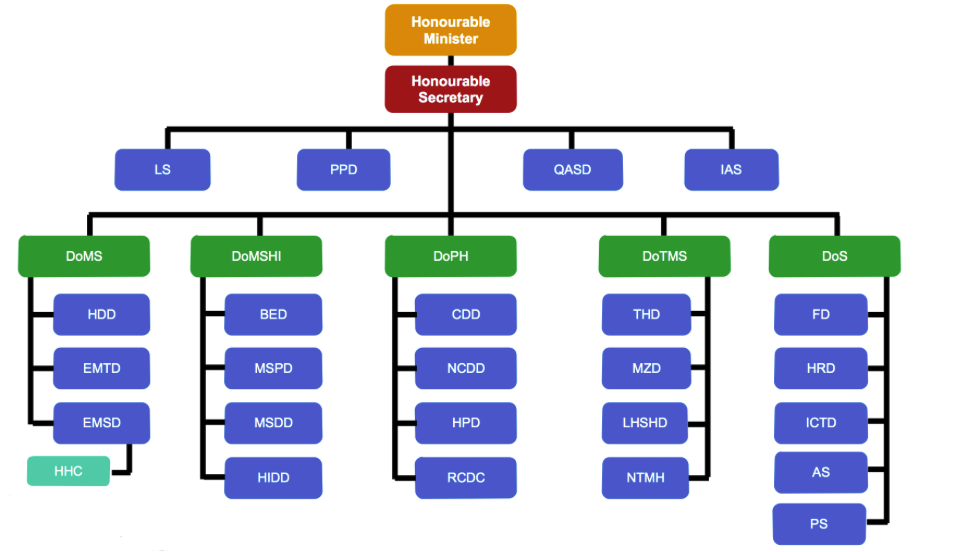
Old MoH Organogram
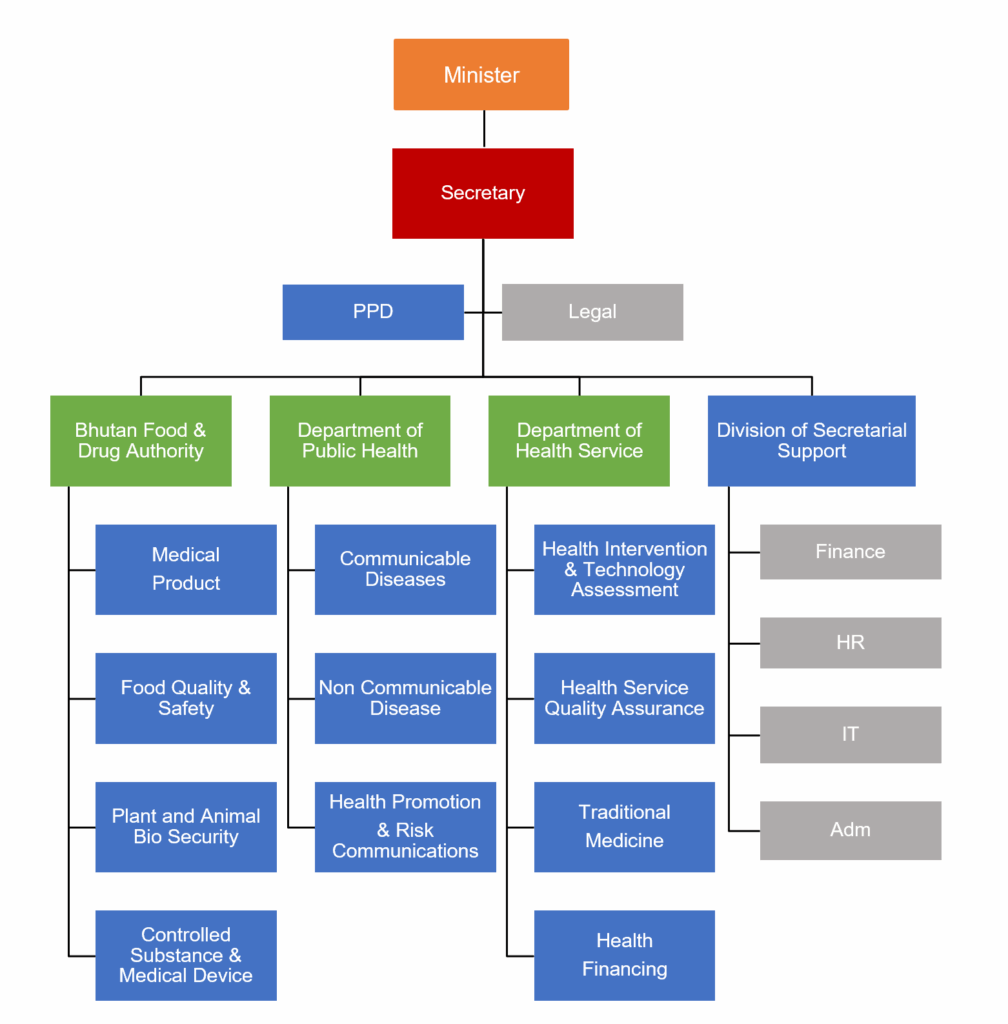
New MoH Organogram
New Ministry of Health
National Medical Service
JDWNRH & KGUMSB
Other Health Facilities
- Vision and Mission: The Ministry of Health envisions “A Healthy and Happy Nation” and its mission is “To promote and provide equitable access to quality health care responsive to the needs of the people of Bhutan.”
- Leadership and Governance: The Ministry of Health is typically headed by a Minister of Health, who is a senior member of the Bhutanese government. The minister is responsible for shaping healthcare policies and ensuring their implementation. The ministry also has a secretary who is responsible for the day-to-day operations and administration of the ministry.
- Healthcare Services: The Ministry of Health oversees a comprehensive healthcare system that includes primary healthcare centers, district hospitals, regional referral hospitals, and a national referral hospital. It is responsible for ensuring that healthcare services are accessible, affordable, and of high quality for all citizens. The ministry plays a crucial role in planning and expanding healthcare infrastructure to meet the needs of the growing population.
- Health Policies and Planning: The ministry is responsible for formulating healthcare policies and strategies that address the evolving healthcare needs of Bhutan. It conducts health assessments and epidemiological studies to guide healthcare planning and resource allocation. Health promotion and disease prevention are also significant components of its policies.
- Regulation and Quality Assurance: The Ministry of Health regulates healthcare providers, facilities, and pharmaceuticals to ensure safety and quality. It sets and enforces standards for healthcare services and facilities to maintain high levels of care. The ministry is responsible for monitoring and evaluating healthcare services to ensure they meet established quality benchmarks. It oversees the licensing and certification of healthcare practitioners to ensure they meet required standards.
- Public Health Initiatives: In addition to clinical services, the ministry focuses on public health initiatives such as disease control, vaccination programs, maternal and child health, and health education. It plays a significant role in responding to health emergencies and managing disease outbreaks.
- Partnerships and Global Health: The Ministry of Health collaborates with international organizations, governments, and NGOs to access resources, expertise, and funding for healthcare programs and initiatives. It participates in global health efforts and contributes to the achievement of international health goals.
- Research and Health Information Systems: The ministry is involved in the development and management of healthcare information systems, including the Electronic Patient Information System (ePIS) as mentioned earlier, to improve healthcare delivery and data management.
- Budget and Resource Allocation: The ministry manages the budget allocated to the healthcare sector, ensuring that funds are distributed to meet the diverse needs of healthcare services and programs.
Advocacy and Policy Development: The ministry advocates for public health and plays a crucial role in policy development related to healthcare financing, accessibility, and service delivery. Overall, the Ministry of Health in Bhutan plays a vital role in ensuring the health and well-being of the Bhutanese population by providing healthcare services, formulating policies, regulating healthcare standards, and working towards the vision of a healthy and happy nation.
Leave a Reply